
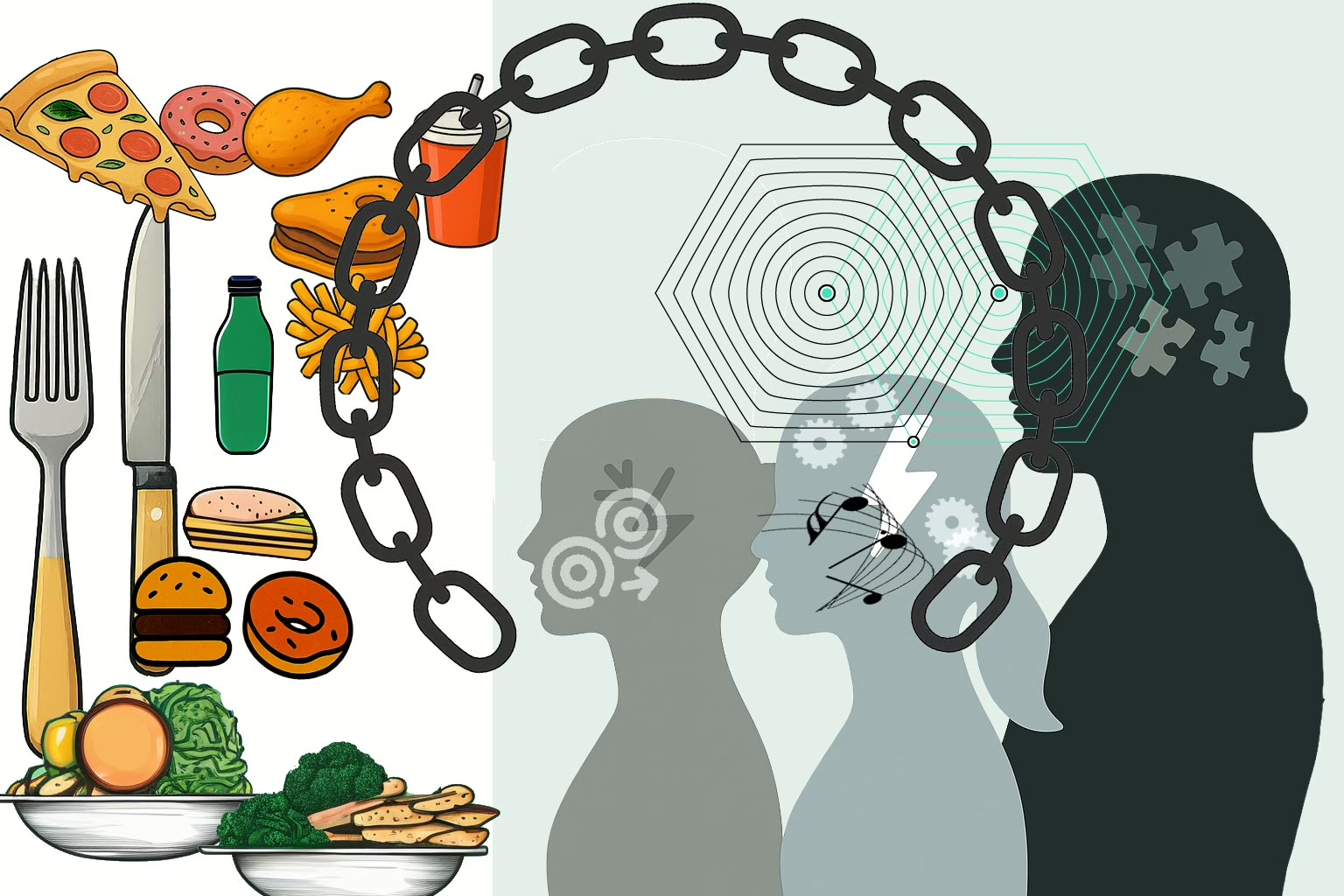
In recent years, there has been a growing understanding of ADHD, and diagnosis has become much easier to predict. Because of this, there appears to be more people than ever with the condition. Whether or not there are actually more people with ADHD than ever before is not clear, as it could just be a result of this improvement in understanding. But there are certainly more people than ever reporting ADHD and being diagnosed with it. And part of this experience for a lot of people is that it can come hand in hand with a whole range of other conditions and disorders too.
For some people, there is a clear and known link between ADHD and eating disorders. It is perfectly possible, and even becoming quite common, to find that someone with ADHD is likely to also have an eating disorder. This is not to say that they always occur together, of course. But it is common enough to warrant an investigation of the two occurring together.
In this post, we are going to take a look into the link between ADHD and eating disorders, discussing some of the possible reasons that they can occur together, shedding light on the shared symptoms the two conditions can have, looking at some of the main risk factors to be aware of, and discussing what possible treatment there might be. Let’s take a look and see what we can uncover about this relationship between the two conditions.
What Is ADHD?
You have certainly heard of ADHD, but if you are wondering what exactly it is, you’re not alone. Although it’s now very commonly spoken about, there is still a lot of misunderstanding around it, so it can be very helpful to clear it up as well as possible. That can mean that you are a lot more likely to really grasp what it is, but perhaps just as importantly, what it isn’t, and that’s something that can prove really important in all of this, especially when it comes to looking at its link with eating disorders too.
So what is ADHD, exactly? Essentially, it is a condition affecting the behavior of a person, which makes them appear restless and impulsive. There can also be difficulty with concentrating, and this can cause all sorts of problems if the person is studying, for example, or trying to keep down a job that requires a lot of concentration on tasks. The symptoms of ADHD are very often noticed quite early on, often below the age of 12, but that is not to say that it’s impossible for someone to be diagnosed older, or even as an adult.
Fortunately, with help, ADHD can improve over time, although it can also provide people with a very difficult time indeed, especially when they are younger.

What Is An Eating Disorder?
Of course, it will also be helpful to know exactly what we are talking about when we talk about eating disorders. There are a lot of different kinds of eating disorders, and just as with ADHD, they are often very misunderstood by the general population. Because of that, there can often be a lot of stigma attached to them, which can make it harder for someone with an eating disorder to get the help they need. All in all, then, the more we all understand eating disorders as a society, the better that is going to be for everyone, including sufferers and those close to them.
An eating disorder is any mental health condition where control of food and eating is used in order to help manage feelings and emotions and other difficult situations in life. That might involve eating too much, eating too little, controlling when you eat, or being over-concerned about body weight, shape and size. It is possible for absolutely anyone to get an eating disorder, although it is most common amongst teenagers and younger adults, and among the female population.
One good thing about eating disorders is that they can respond very well to treatment, and it is perfectly possible to completely recover from an eating disorder.
So why is it that these two conditions often go hand in hand and what can be done about this?
ADHD & Eating Disorders: The Link
Having ADHD has been known to put you at a higher potential risk of also developing eating disorders, although it is also true that treatment of either can help to alleviate the symptoms of the other. This mostly happens because ADHD can have an impact on your eating habits, especially when it comes to the felt need to control those eating behaviors. Let’s take a look in some more detail about how this happens and why it might be the case.
ADHD & Binge Eating
The most common link that we know about is actually between ADHD and binge eating. It has been shown in research that ADHD can lead to someone having a binge eating disorder (BED). This is a disorder where a person binge eats, eating copious amounts of food, even after they feel full, and even when they know it is to the detriment of their health and wellbeing. This link has been found in both children and adults, and there is some suggestion that part of the cause might be to do with something around impulse control, which is an important factor in both ADHD as well as many eating disorders.
In one study, it was even found that 26% of children who had ADHD also experienced binge eating episodes, compared with only 2% of children without ADHD. So clearly, there is quite a strong link here between the two which cannot be ignored, and it does seem that there is quite a bit of overlap.
Because the nature of binge eating is impulsive, it has been suggested that there may be a common link with ADHD, which also has high levels of impulsivity as one of its main symptoms. Of course, this does not mean that someone with ADHD necessarily develops BED, or vice versa, just that there is a higher chance of it happening.
ADHD & Anorexia: Is There A Link?
The link between ADHD and anorexia is somewhat less strong, however. Anorexia is one of the better-known eating disorders, and perhaps for that reason people often assume that it must be one that has links with ADHD. And there has been some research to suggest that there might be a correlation between the two. On the other hand, some say that the link is less common, and it must be said that the science is not quite as robust as it is for ADHD & BED.
The Potential Causes & Risks
So there’s clearly something of a link between ADHD and eating disorders. But how might this come about? There are actually a number of risk factors that may contribute towards this situation. Some of the possible ADHD risk factors for also developing eating disorders include impulsive behavior, which may lead to disordered eating such as binge eating, and certain comorbidities that may lead to various kinds of different eating behavior as well as some of the ADHD behaviors that we see.
It might also be that it’s the other way around, that poor eating habits can lead to some of the symptoms of ADHD. There is also some evidence to suggest that in both ADHD and eating disorders, the dopamine reward system might be implicated. Also, there could be something around the perception of hunger cues and feelings of satiety which might have an impact here.
In some cases, the medication that is used for ADHD has been known to increase the chance of an eating disorder developing.
Treatment
So we’ve looked at the various links between ADHD and eating disorders, as well as some of the risk factors involved in both. What kind of treatment is available that is able to help combat both of these conditions at once?
Because of the nature of having more than one condition, it can be complex to treat, and it’s a situation that will often involve the help of a whole team of doctors and nutritionists. However, there are some trends in the treatments offered which can help to shed some light on what might be helpful.
For instance, stimulant medication for ADHD may help with binge eating and with self-control important in avoiding eating disorders, but often with a side effect of a loss of appetite. At other times, Cognitive Behavioral Therapy can be utilized to provide a solution to both conditions at once, if an underlying pattern of thoughts and behavior is discovered. This can particularly help around ideas of a poor body image and avoiding negative thought patterns. Also, some people have found that SSRIs, a class of antidepressants, can help with treating both ADHD and eating disorders.
As you can see, the link between ADHD and eating disorders is complex, and research continues to throw new light on it. But anyone with either or both conditions can get help.