
Eating disorders are complex mental health conditions that require a comprehensive and multi-faceted approach to treatment. The impact of disease and psychological models on eating disorder treatment is profound, shaping the way clinicians understand and address these disorders. This article aims to provide an in-depth exploration of these influences, delving into the intricacies of the biological, psychological, and social factors that contribute to the development and maintenance of eating disorders, and how these factors inform treatment strategies.
Understanding Eating Disorders
Eating disorders, including anorexia nervosa, bulimia nervosa, and binge eating disorder, are characterized by a persistent disturbance of eating or eating-related behavior that results in the altered consumption or absorption of food and that significantly impairs physical health or psychosocial functioning. They are serious, potentially life-threatening conditions that affect a person’s emotional and physical health.
These disorders often develop in adolescence or early adulthood, but can occur at any age, and are prevalent in both men and women. They are often associated with significant psychological distress and frequently co-occur with other psychiatric disorders, such as depression, anxiety, and substance abuse.
The Role of Disease Models in Eating Disorder Treatment
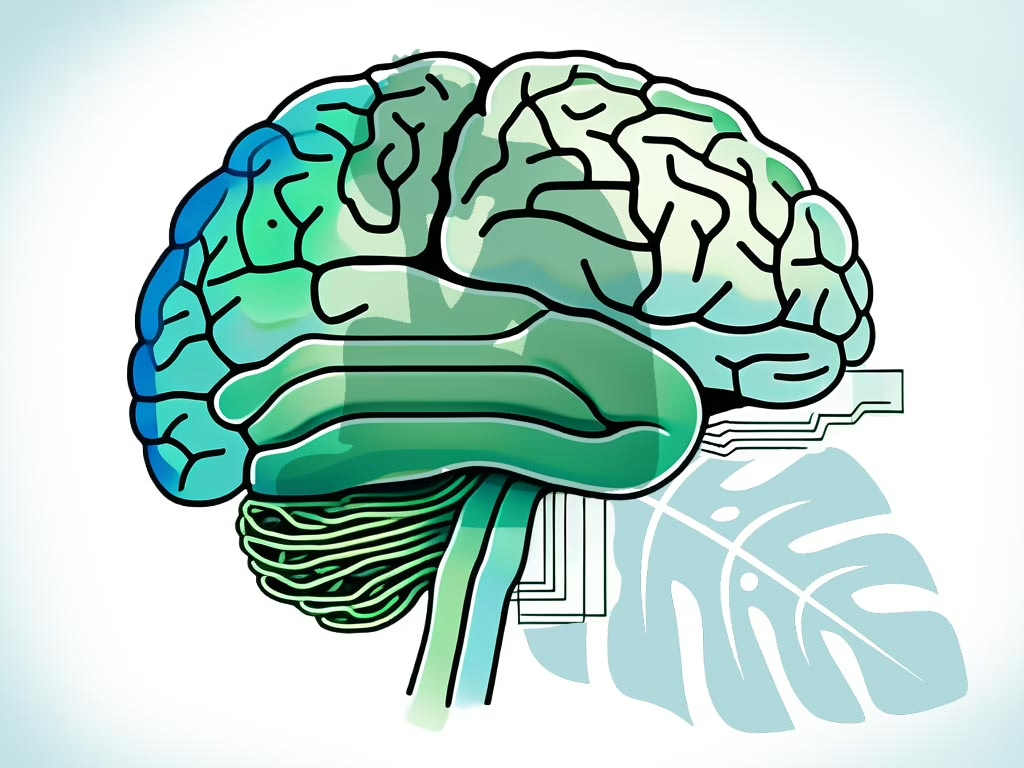
Disease models of eating disorders view these conditions as illnesses with biological and genetic origins. This perspective is supported by research demonstrating that eating disorders often run in families, suggesting a genetic predisposition. Furthermore, neurobiological studies have identified alterations in brain structure and function in individuals with eating disorders, indicating that these conditions may be associated with abnormal neural circuitry.
From a treatment perspective, the disease model emphasizes the need for medical intervention. This might include nutritional rehabilitation to restore physical health, medication to address co-occurring psychiatric conditions, and monitoring to manage the risk of medical complications. The disease model also underscores the importance of early detection and intervention, as early treatment is associated with better prognosis.
The Role of Psychological Models in Eating Disorder Treatment
Psychological models of eating disorders focus on the cognitive, emotional, and behavioral factors that contribute to the development and maintenance of these conditions. These models highlight the role of dysfunctional attitudes about weight and shape, maladaptive coping strategies, and interpersonal difficulties in eating disorders.
From a treatment perspective, psychological models inform the use of psychotherapy in eating disorder treatment. Cognitive-behavioral therapy (CBT) is the most well-established psychological treatment for eating disorders. CBT targets the dysfunctional attitudes and behaviors associated with eating disorders, helping individuals to develop healthier eating habits and coping strategies.
Integrating Disease and Psychological Models in Treatment
While disease and psychological models offer valuable insights into the nature of eating disorders, neither perspective alone is sufficient to fully capture the complexity of these conditions. Instead, a more comprehensive approach that integrates both models is needed.
This integrated approach recognizes that eating disorders are biopsychosocial conditions, influenced by a combination of biological, psychological, and social factors. It also acknowledges that effective treatment must address all of these factors. This might involve a combination of medical intervention, psychotherapy, and social support, tailored to the individual’s needs.
###
Understanding the impact of disease and psychological models on eating disorder treatment is crucial for clinicians, as it shapes the way they approach these complex conditions. By integrating these models, clinicians can develop comprehensive treatment plans that address the full range of factors contributing to eating disorders, ultimately improving the chances of recovery.
As our understanding of eating disorders continues to evolve, it is likely that our treatment approaches will also continue to develop. Ongoing research into the biological, psychological, and social aspects of these conditions will further enhance our ability to provide effective, evidence-based treatment for individuals struggling with eating disorders.
If you or a loved one is navigating the complexities of an eating disorder, ViaMar Health is here to support you on your journey to recovery. Our expert team is committed to providing personalized, evidence-based treatment tailored to your unique needs, including co-occurring mental health conditions. With a range of programs from residential to intensive outpatient care, we embrace each individual at their current stage of recovery. Don’t hesitate to take the first step towards healing. Speak with an Admission Specialist today to start your voyage to wellness with ViaMar Health.